
On top of Physical Infrastructure sits
The Transport and Access Network Layer, The Reliability Engine that makes sure data arrives correctly and completely between endpoints, ensuring that communication is stable even in a chaotic global network.
The primary roles within this category are as follows:
By Network Scope:
Long-Haul Transport Provider (Fiber)

Provides high-capacity fiber connectivity across long distances, interconnecting major cities, regions, countries, and international network hubs.
Example: Lumen, euNetworks, NTT Global IP Network
Regional Transport Provider (Fiber or Microwave)
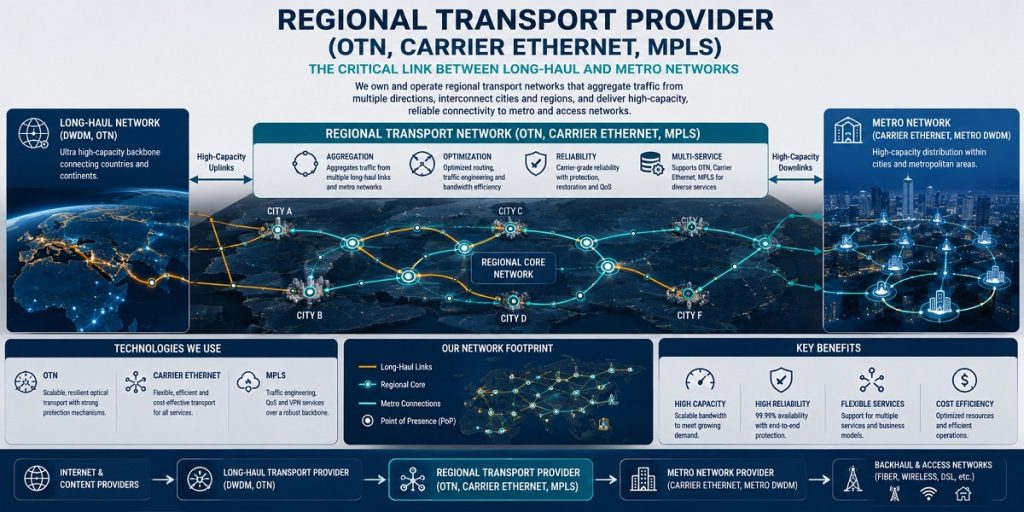
Metro Network Provider (Fiber, Microwave or Satellite)

Provides transport connectivity within metropolitan areas, interconnecting access networks, data centers, enterprises, and local network aggregation points.
Example: Zayo, euNetworks, KDDI
Backhaul Provider (Fiber, Microwave or Satellite)
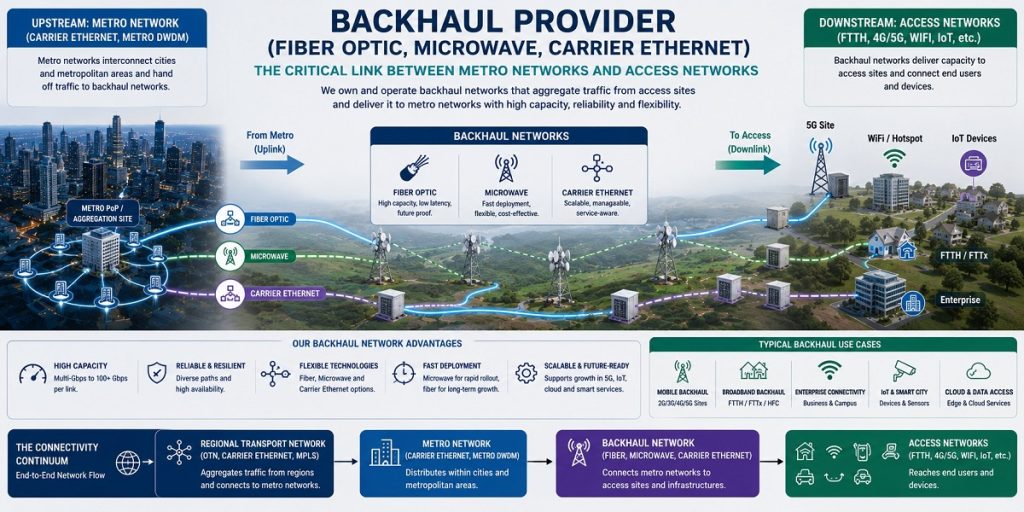
Transports aggregated traffic between access networks and core networks using fiber, microwave, or satellite transmission infrastructure.
Example: Crown Castle, Colt, KDDI
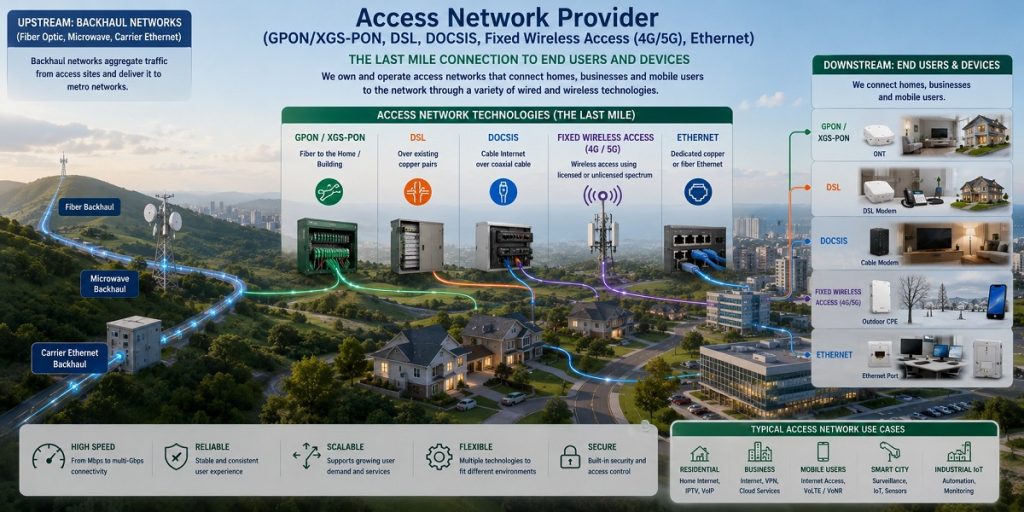
By Transmission Medium:
Optical Fiber Transport Provider
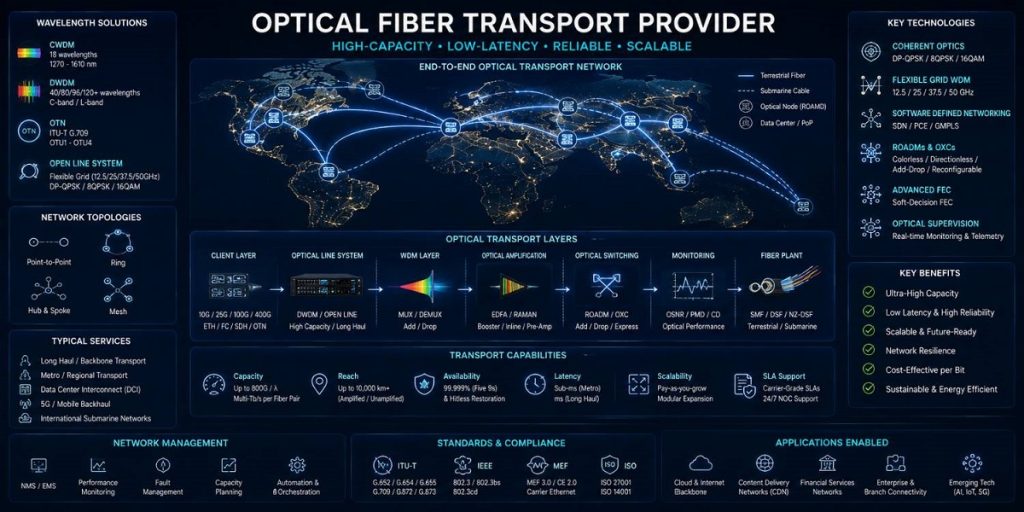
Provides high-capacity transport connectivity using optical fiber infrastructure for reliable, low-latency transmission across diverse network distances.
Example: Lumen, euNetworks, NTT Global IP Network
Microwave Transport Provider

Provides wireless transport connectivity using microwave radio links where fiber deployment is unavailable, impractical, or economically inefficient.
Example: Aviat Networks, Cellnex, Rakuten Mobile
Satellite Transport Provider

Provides transport connectivity through satellite communication systems, enabling coverage across remote, geographically challenging, or underserved areas.
Example: Viasat, SES, SKY Perfect JSAT